The Mongolia events season nobody tells you about (and honestly, good – more eagles for us)
Everyone and their cousin tells you to visit Mongolia in summer. Naadam this, green steppe that. Fine. But here’s the thing nobody puts on a postcard: by the time September rolls around, the tour buses thin out, the larch trees set themselves on fire (the pretty, golden, not-actually-on-fire kind), and a bunch of guys on horseback show up with eagles the size of toddlers.
If you’re scrolling around looking for Mongolia events worth planning a trip around, stop scrolling. September, October and November is your window. Here’s why.
For den komplette praktiske guide til planlægning af din rejse, besøg vores Mongoliet rejseguide.
1 – The weather finally chills out
Summer in Mongolia means Gobi temperatures flirting with 40°C and a tourist density that can make even a country the size of Western Europe feel a little crowded at the popular spots. Come September, the country exhales. Daytime temperatures sit in a very reasonable mid-teens-to-twenties range, nights get crisp, and the whole landscape stops looking sun-bleached and starts looking like it’s been styled by an Instagram filter – except it’s real, and you don’t have to fight anyone for the photo.
October and November turn the dial further toward “bring a real jacket,” with daytime temperatures dropping toward single digits and nights well below freezing in places. That’s not a downside – it’s the trade for empty landscapes, dramatically lower prices, and front-row access to the country’s biggest autumn spectacle. More on that immediately below.

2 – The headliner: Golden Eagle Festivals (yes, plural!)
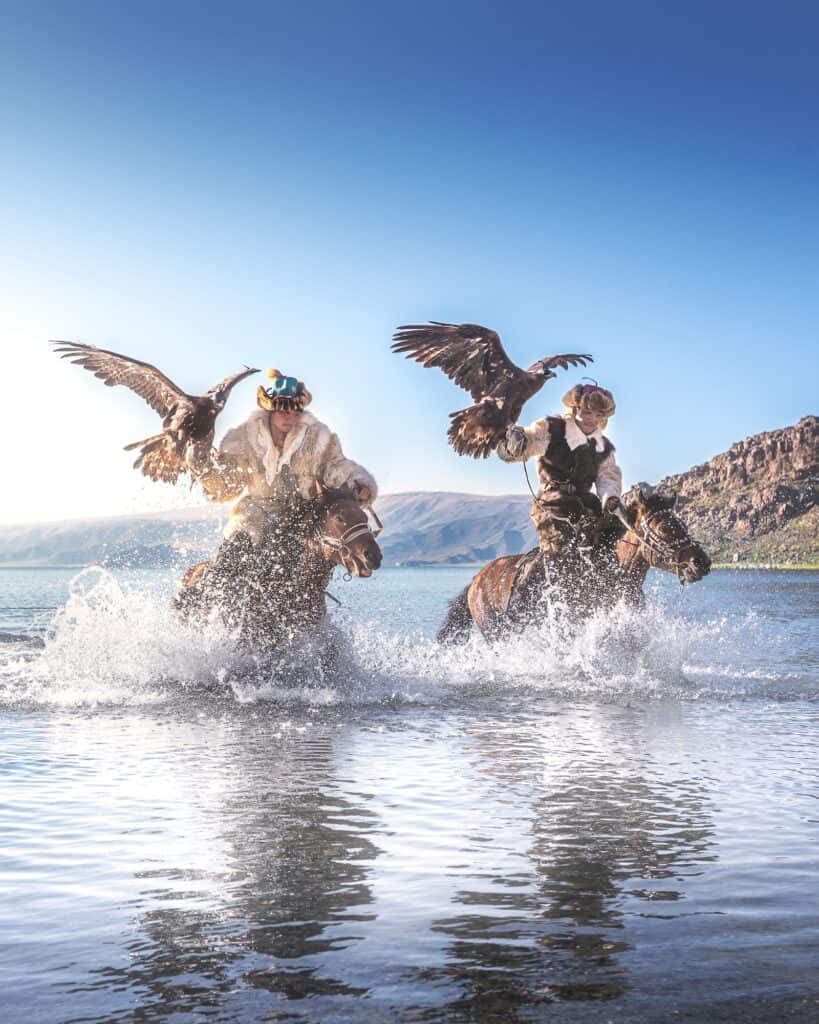
This is the main reason your calendar should have “Mongolia” circled in September and October. Out in Bayan-Ölgii province, in the wind-scoured Altai-bjergene near the Kazakh-majority town of Ölgii, Kazakh eagle hunters spend the autumn showing off centuries of falconry tradition – and they don’t just do it once.
Mid-September: Smaller, more local qualifying festivals (Altai Nomad Games and the Sagsai festival among them) kick off the season: Fewer tourists, lower prices, and a real shot at actually chatting with the hunters.
Early October: The big one. The main Golden Eagle Festival in Ölgii draws hunters from across the province for two days of speed trials, precision hunting, horseback games, and a parade of traditional dress that makes every other “cultural festival” you’ve been to look like a school play.
Picture this: a hunter in a fox-fur hat gallops across the steppe, throws his arm up, and an eagle the size of a toddler drops out of the sky onto a lure like it’s been waiting all week for this exact moment of drama. It has. That’s basically the whole festival, and it’s spectacular every single time.
3 – The larch trees show off
Northern Mongolia – think Khuvsgul, Arkhangai, the Khangai range – turns into a wall of gold in September as the larch forests change color. Unlike most evergreens, larches actually drop their needles in autumn, and right before they do, they blaze a deep, almost unreasonable gold against the dark green of the pines around them. Paired with blue alpine lakes and herds of yak doing absolutely nothing in the foreground, it’s the kind of scenery that makes you stop the car every ten minutes – which, conveniently, is exactly the kind of trip a self-drive 4×4 route is built for.
4 – Front-row seats to real nomadic life
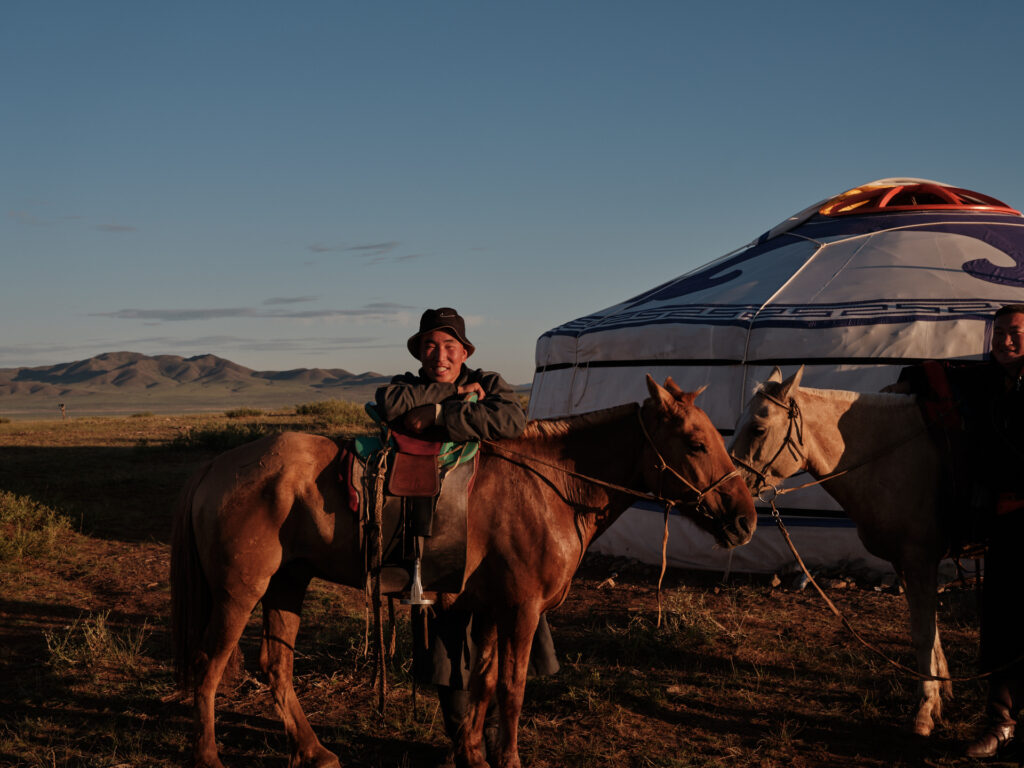
Summer tourism in Mongolia is fun, but it’s also peak season – which means everyone’s a little busy hosting. Autumn is different. This is when herding families are deep into preparing for winter: processing milk, making cheese and dried curds, sorting livestock, and generally doing the unglamorous, genuinely fascinating work that keeps a nomadic household running through a brutal Mongolian winter. Travelers who show up in September often get pulled into the process – a bowl of fresh airag here, a quick lesson in cheese-pressing there. It’s less staged, more “we just happen to be doing this anyway, want to help?”
5 – Taliin Tumen Aduu: Where Mongolia’s horse culture comes alive
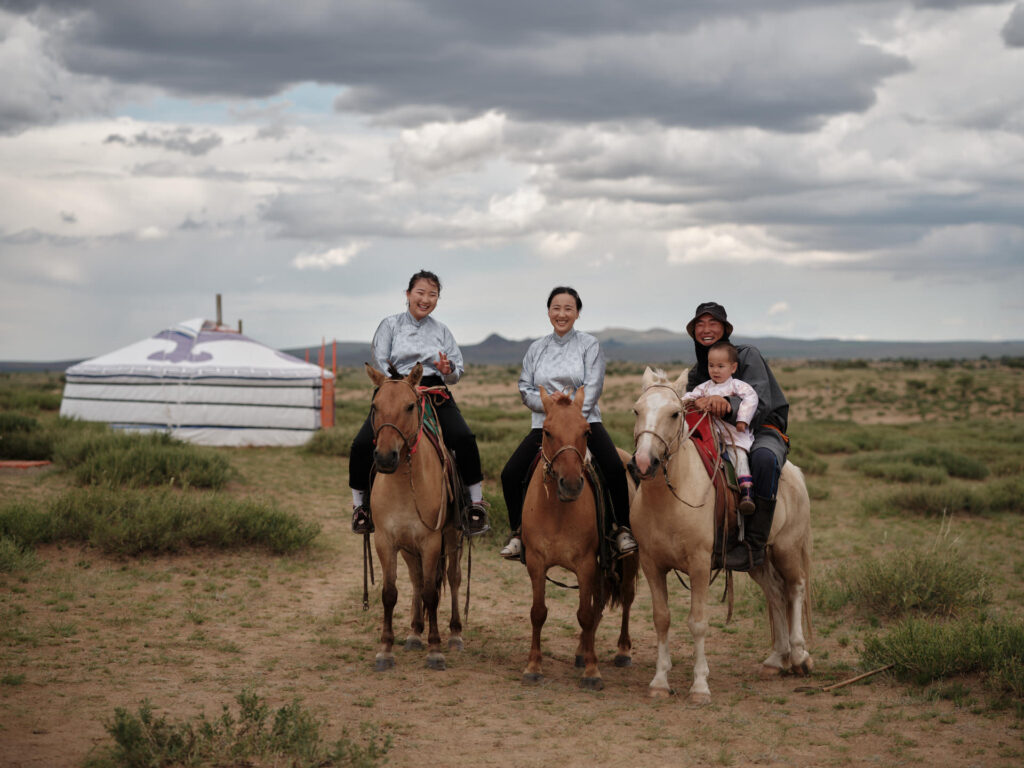
Among the most unforgettable Mongolia events, the Taliin Tumen Aduu Festival brings every November the spirit of the steppe to life. Hundreds of horses thunder across the grasslands as riders showcase skills passed down through generations. From traditional herding displays to vibrant cultural performances, the festival offers a front-row seat to Mongolia’s nomadic heritage. It’s a breathtaking celebration of freedom, tradition, and the enduring bond between people and horses.
6 – Empty skies, loud stars
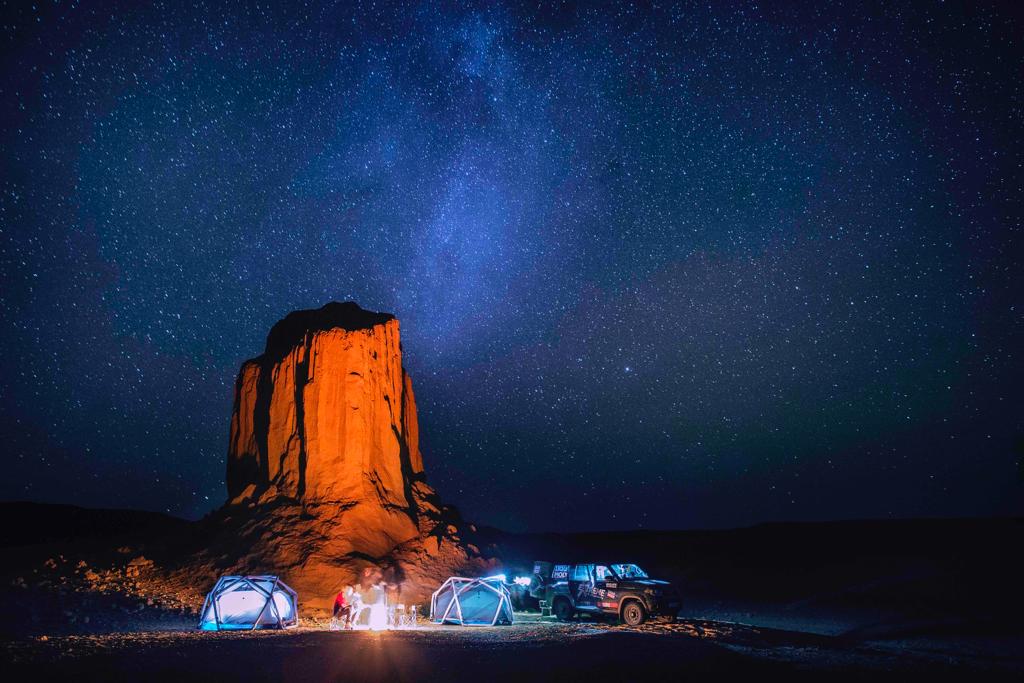
As the days shorten and the air dries out, Mongolia’s already-famous night skies get even better. With essentially zero light pollution outside Ulaanbaatar and clearer autumn air, late September and early October nights deliver a Milky Way view that genuinely stops conversations mid-sentence. Bring warm layers, bring a tripod, and lie back.