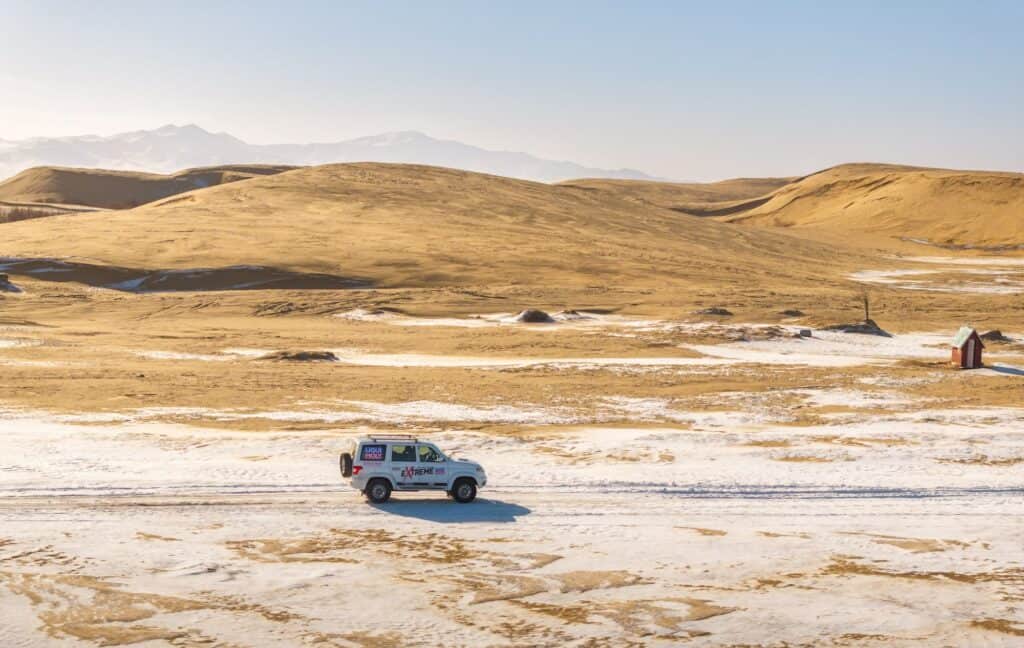
Fragen Sie jeden Reisenden, was ihm beim Hören von “Gobi-Wüste” in den Sinn kommt, und Sie erhalten fast immer die gleiche Antwort: Sand, bis ans Ufer des Ozeans. Das ist ein anhaltendes Missverständnis – denn in Wirklichkeit ist nur etwa fünf Prozent der Gobi-Wüste von Dünen bedeckt. Der Rest besteht aus geologischen Zonen aus lila Felsformationen, Granit-Türmen, die wie die Ruinen einer vergessenen Zivilisation aussehen, und Klippen, wo die weltweit ersten Dinosaurier-Eier entdeckt wurden. Im Ernst genommen ist die Gobi-Wüste überhaupt keine einzige Wüste, sondern ein Mosaik aus Steppen-, Halbwüsten- und steilen Felsformationen – abgelegen, selten besuchter Orte, und gerade deshalb einer der beeindruckendsten Orte der Erde.
Für den vollständigen praktischen Leitfaden zur Planung Ihrer Reise besuchen Sie unsere Mongolei Reiseführer.
Die Gobi-Wüste in Zahlen
(und Unmöglichen)
Nur fünf Prozent Sand: Der Rest der Gobi-Wüste besteht aus Steppen-, Fels-, Kies- und Halbwüstengebieten. Wer eine endlose Anzahl von Sanddünen erwartet, hat diese Landschaft völlig falsch eingeschätzt.
Geburtsort des Dinosaurier-Eies. An den Flammenklippen von Bayanzag wurden 1923 die weltweit ersten fossilisierten Dinosaurier-Eier entdeckt – ein Meilenstein in der Paläontologie, der mitten in der Wüste gefunden wurde.

Singende Dünen. An bestimmten Sandbergen in der Gobi-Wüste erzeugt der Wind einen tiefen, summenden Klang. Dort stehen fühlt man die raue Kraft der Elemente.
Ein Temperaturunterschied von bis zu 80 Grad Celsius pro Jahr. Sommer über 40°C, Winter unter minus 40°C: die Gobi-Wüste kennt keine Mäßigung.
Das Gobi-Bärchen (Mazaalai). Schätzungen zufolge leben nur etwa 30 bis 40 dieser Tiere noch in freier Wildbahn, was den Gobi-Bären zur seltensten Bärenart der Welt macht. Es ist außerdem die einzige Bärenart, die dauerhaft in einer Wüste lebt. Die Mazaalai ernährt sich teilweise von wilden Rübenwurzeln und bewegt sich manchmal über 160 Kilometer zwischen den Wasserstellen. Einen zu sehen, ist buchstäblich seltener als das Erscheinen der Lotterie.
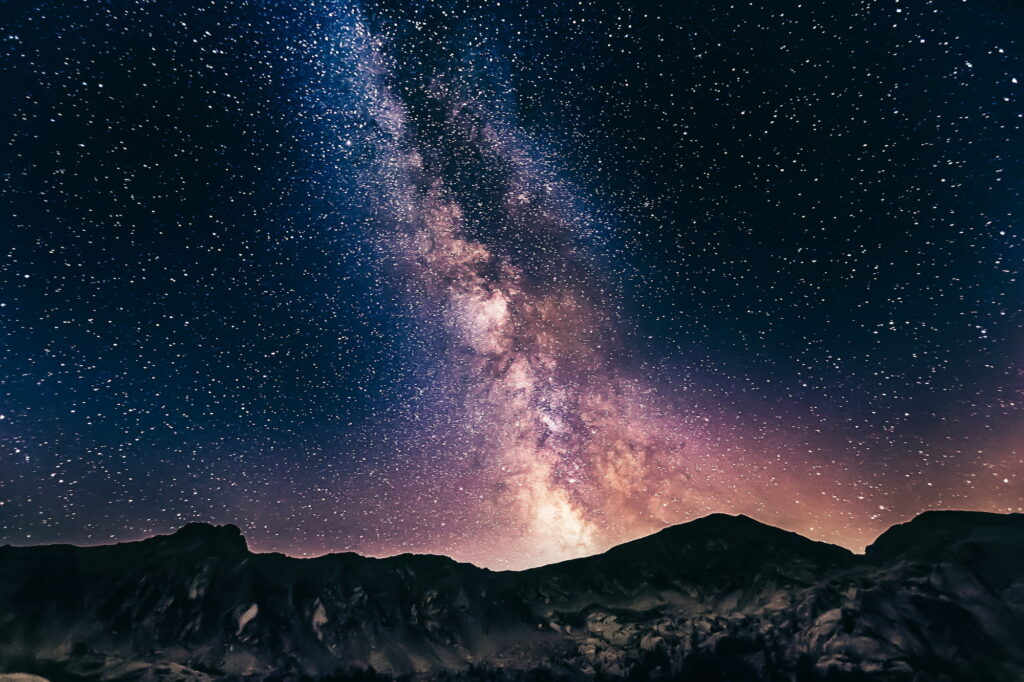
Eine der dunkelsten Nächte auf der nördlichen Hemisphäre. Da es keine großen Städte und praktisch keine Lichtverschmutzung gibt, fühlt sich die Milchstraße so nah an, dass man sie anfassen kann.
Größer als Deutschland, Frankreich und Spanien zusammen. Die Gobi-Wüste erstreckt sich über etwa 1,3 Millionen Quadratkilometer durch Mongolei und China. Kamelen statt Pferde. In der Wüste Gobi sind zweihalsige Baktrische Kamele die bevorzugte Transportart – dies ist eine der letzten Regionen auf der Erde, in denen ihre wilde Vorfahrenform noch existiert.
Die Gobi-Wüste auf eigene Faust erkunden
Die Abenteuer des Lebens
Die beste Art, die Gobi-Wüste zu erleben, ist an Bord eines Fahrzeugs – bei einer selbstorganisierten Tour in einem 4×4, bei der die Reiseenden selbst das Fahren übernehmen und die Routenführung, die Unterkunft und die Logistik im Hintergrund organisiert werden. Um den Beginn des Herbstes zu markieren, haben wir zwei neue Routen in die Gobi-Wüste ins Leben gerufen:
- Schnelle Gobi-Erkundung (4 Tage): Ein kompaktes Einführungsprogramm über die Gobi-Wüste – Tsagaan Suvarga, die Dünen von Moltsog Els und die Flammenklippen von Bayanzag, mit Abfahrt direkt vom Flughafen.
- Gobi-Dünen ins Pferdeland (9 Tage): Eine detaillierte Route vom südlichen Gobi-Wüstengebiet bis in das grüne Reiterland der Khangai-Berge und die historische Stadt Karakorum.
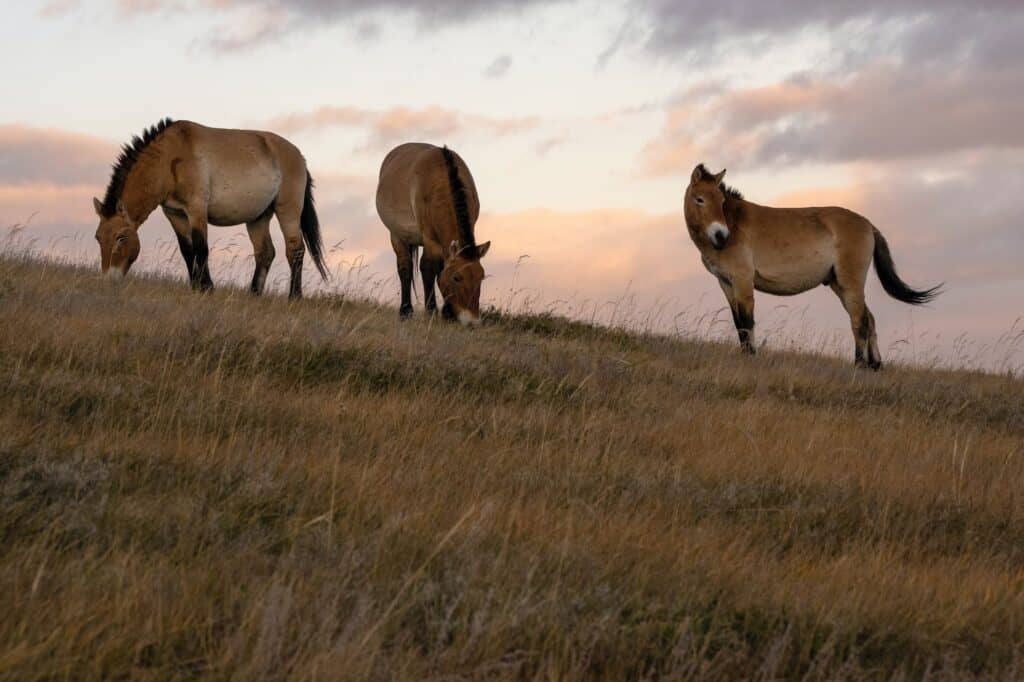
Beide Touren sind als Selbstfahrer-Reisen konzipiert: Ihr eigenes Fahrzeug, eine zuvor geplante GPS-Route, gebuchte Unterkunft und 24/7-Support durch das Team vor Ort. Eine Sache gilt für beide: Sobald Sie die Gobi-Wüste selbst durchgefahren sind, kehren Sie selten wieder zurück und nennen es “nur Sand”.”