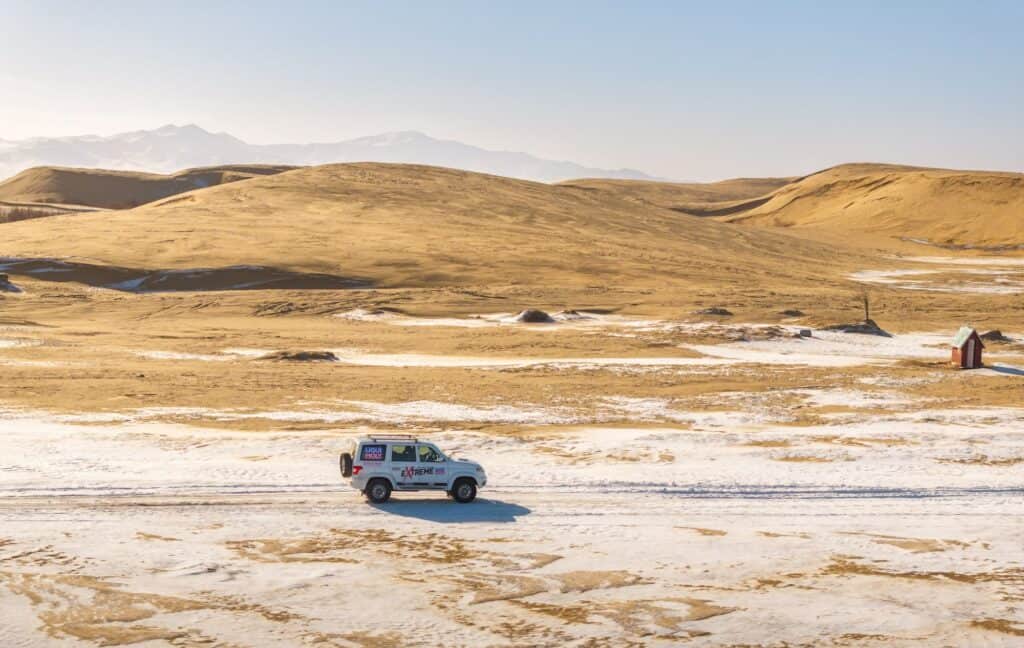
Ask any traveler what they picture when they hear “Gobi Desert,” and you’ll almost always get the same answer: sand, as far as the eye can see. It’s a persistent misconception – because in reality, only about five percent of the Gobi Desert is covered in dunes. The rest is a geological patchwork of purple rock canyons, granite towers that look like the ruins of a forgotten civilization, and cliffs where the world’s first dinosaur eggs were discovered. Strictly speaking, the Gobi Desert isn’t even a single desert at all, but a mosaic of steppe, semi-desert, and bare rock – remote, rarely visited, and precisely because of that, one of the most striking places on Earth.
For the complete practical guide to planning your trip, visit our Mongolia travel guide.
The Gobi Desert in Numbers
(and absurdities)
Only five percent sand: The rest of the Gobi Desert is made up of steppe, rock, gravel, and semi-desert terrain. Anyone expecting endless dunes has completely misjudged this landscape.
Birthplace of the dinosaur egg. At the Flaming Cliffs of Bayanzag, the world’s first fossilized dinosaur eggs were discovered in 1923 – a landmark moment in paleontology, found in the middle of the desert.

Singing dunes. At certain sand mountains in the Gobi Desert, the wind produces a deep, humming sound. Standing there, you feel the raw power of the elements.
A temperature swing of up to 80 degrees Celsius a year. Summers above 40°C, winters down to minus 40°C: the Gobi Desert doesn’t do moderation.
The Gobi bear (Mazaalai). Estimates suggest only around 30 to 40 of these animals still live in the wild, making the Gobi bear the rarest bear species on the planet. It’s also the only bear species that lives permanently in a desert. The Mazaalai feeds partly on wild rhubarb roots and sometimes travels more than 160 kilometers between watering holes. Spotting one is, quite literally, rarer than winning the lottery.
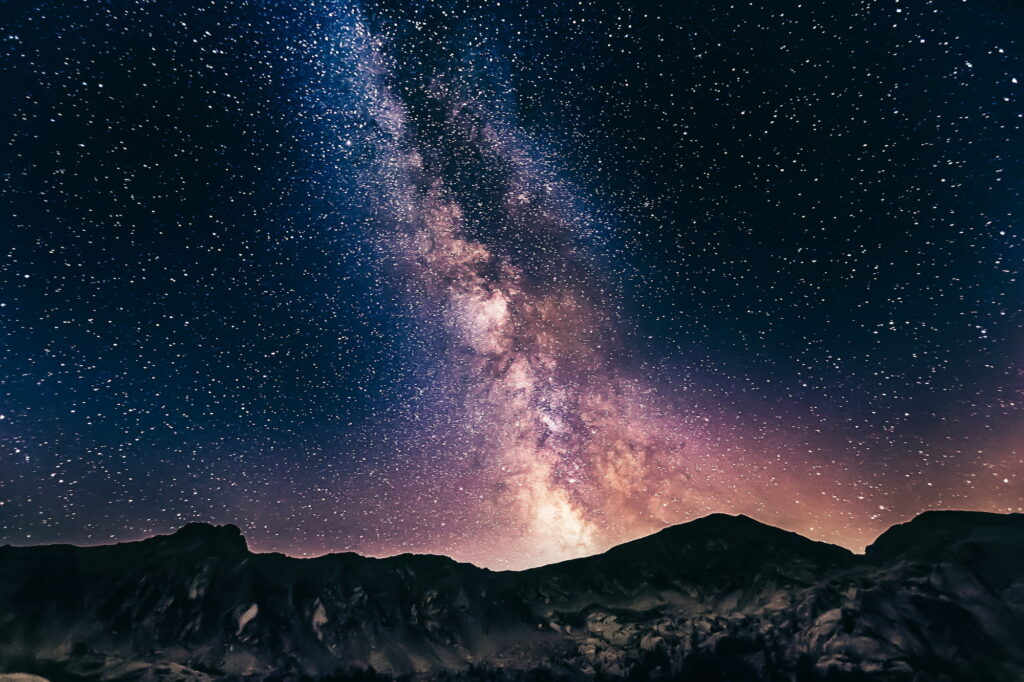
One of the darkest night skies in the Northern Hemisphere. With no major cities and virtually no light pollution, the Milky Way feels close enough to touch.
Larger than Germany, France, and Spain combined. The Gobi Desert stretches across roughly 1.3 million square kilometers through Mongolia and China. Camels instead of horses. In the Gobi Desert, two-humped Bactrian camels are the transportation of choice – this is one of the last regions on Earth where their wild ancestral form still exists.
Exploring the Gobi Desert on a Self-Drive Trip
The adventure of a lifetime
The best way to experience the Gobi Desert is behind the wheel — on a self-drive tour in a 4×4, where travelers do the driving themselves while the route, accommodation, and logistics are organized in the background. To mark the start of autumn, we have launched two new routes into the Gobi Desert:
- Quick Gobi Exploration (4 days): A compact introduction to the Gobi Desert — Tsagaan Suvarga, the dunes of Moltsog Els, and the Flaming Cliffs of Bayanzag, departing directly from the airport.
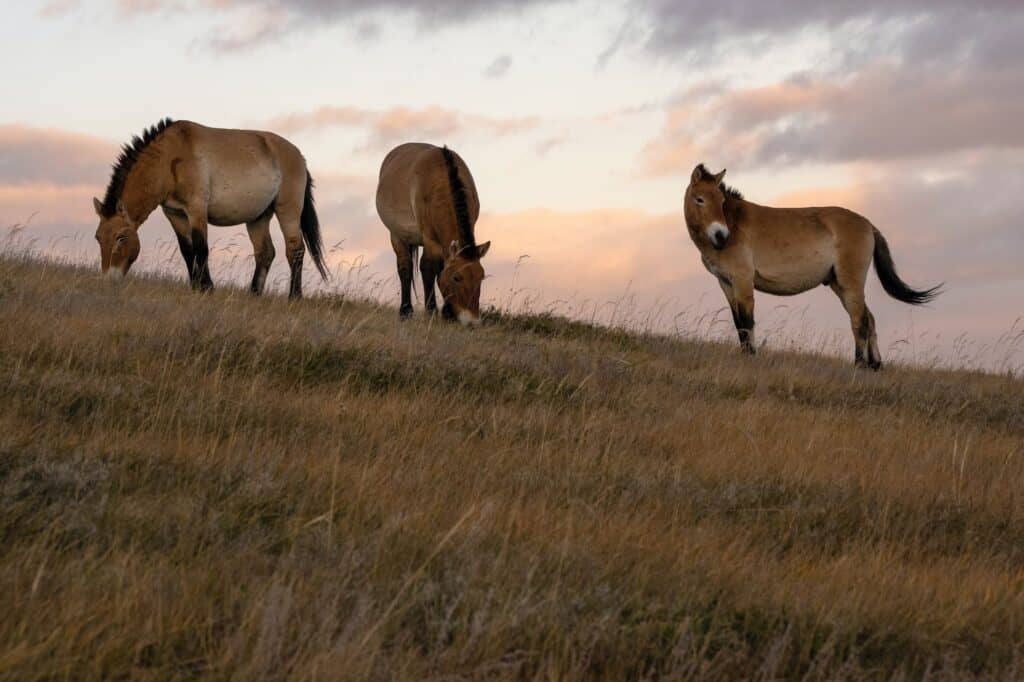
- Gobi Dunes to Horse Country (9 days): A more in-depth route from the southern Gobi Desert all the way to the green horse country of the Khangai Mountains and the historic city of Karakorum.
Both tours are designed as self-drive trips: your own vehicle, a pre-planned GPS route, booked accommodation, and 24/7 support from the on-the-ground team. One thing holds true for both — once you’ve driven through the Gobi Desert yourself, you rarely go back to calling it “just sand.”