Ask most people to name Mongolia festivals and you’ll get one answer: Naadam, the July extravaganza of wrestling, archery, and horse racing that shuts down the whole country in the best way possible. Fair enough – it deserves the hype. But Naadam is really just the opening act. Scattered across the calendar, in provinces most travelers never even hear the name of, the country runs an entire lineup of Mongolia festivals built around a single animal: camels in the frozen Gobi, horses on the eastern steppe, yaks in the volcanic highlands, reindeer deep in the northern taiga. No fireworks, no stadiums – just herders, their animals, and centuries of nomadic tradition on full display.
We’re leaving the famous Golden Eagle Festival out of this one (it gets plenty of attention already – check out our Eagle Hunters & Empires tour). Instead, here are the Mongolia festivals that fly refreshingly under the radar, and exactly when and where to catch them.
For the complete practical guide to planning your trip, visit our Mongolia travel guide.
1 – Ten thousand hooves on the eastern steppe: Taliin Tumen Aduu, the Steppe Horse Festival
Autumn/Winter · Khentii Province · Eastern Mongolia
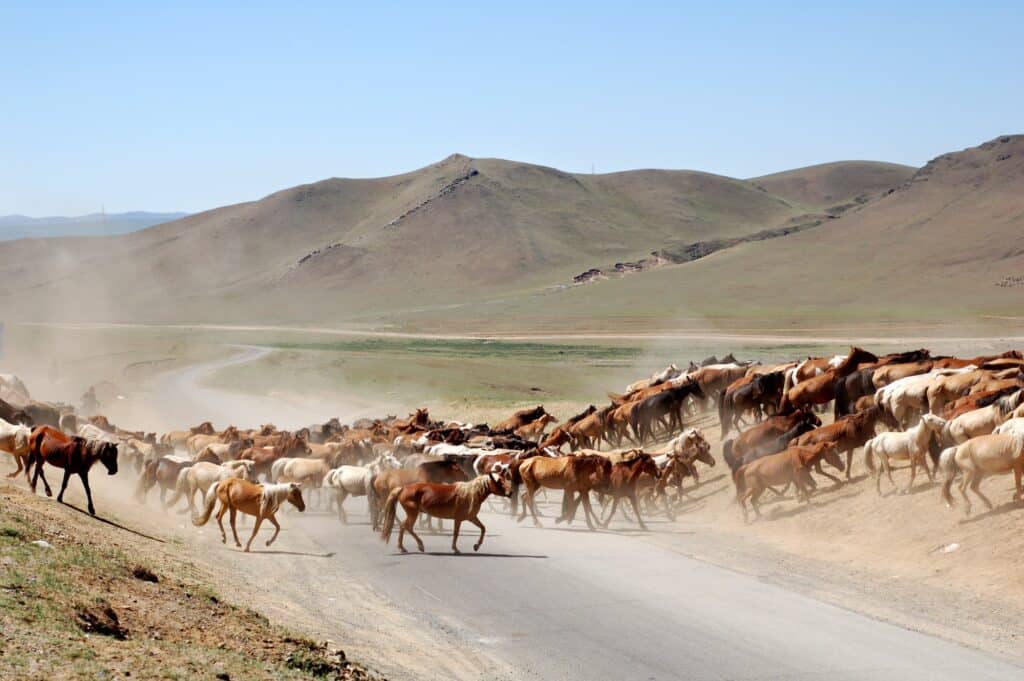
If there’s one animal that defines Mongolia more than any other, it’s the horse – and nowhere is that clearer than at Taliin Tumen Aduu, the “Steppe Ten Thousand Horses” festival, held in Batnorov soum and more recently in Chinggis Town, both in Khentii Province – the birthplace of Chinggis Khaan himself. The scale is the whole point: horse herders travel in from every corner of the country, bringing over three thousand horses with them, and watching that many animals galloping across open steppe at once is one of those moments that makes you question every nature documentary you’ve ever seen.
The Mongolia festival exists to safeguard the nomadic tradition of horse herding and celebrate the skill of the herders who keep it alive, and the program backs that up: horse races, lassoing competitions, a parade of child jockeys, presentations of different horse breeds, a “best mare” contest, and folklore concerts running alongside it all. Riders show up in full traditional dress, saddles hand-tooled and gleaming, and if you’re into photography, this is the Mongolia festival that will wreck your memory card. One photographer’s shot from here even went viral internationally – a horse whose mane looked so wild it got compared to a pop star’s.
Khentii Province isn’t just about Mongolia festivals, either – it’s stacked with sites tied to Chinggis Khaan’s early life, so it pairs naturally with a longer loop through the east. Our Northern Mongolia Loop can be adapted to swing through this region if the timing lines up.
2 – A thousand camels on a frozen sea of sand: The Thousand Camel Festival
Winter · Dalanzadgad, Umnugovi Province · Southern Mongolia
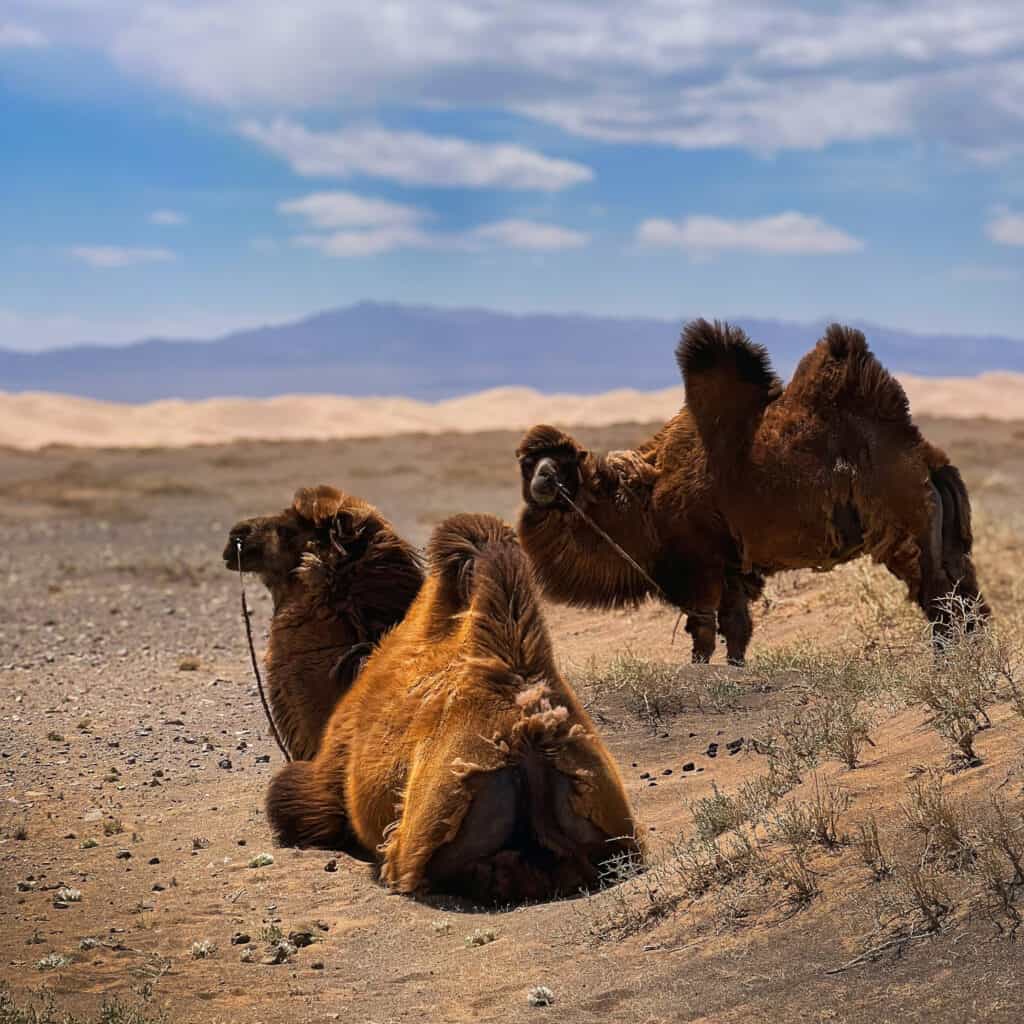
Picture this: golden Gobi dunes buried under a dusting of snow, temperatures dropping well below freezing, and hundreds of Bactrian camels – the two-humped kind, dressed in their thick winter coats – lining up at a start line. That’s the Thousand Camel Festival, running every February near Dalanzadgad since 1997, and it’s become one of the most photographed winter Mongolia festivals on the planet.
It started as a grassroots effort by local herding communities to protect the Bactrian camel, whose numbers had been quietly declining for over a decade, and to keep camel-herding traditions alive for the next generation. It worked almost too well: in 2016 the festival landed itself in the Guinness World Records with 1,108 camels completing a 15-kilometer race, smashing the previous record held by Inner Mongolia. These days the festival runs over two days and includes camel polo, camel parades, a “best-dressed couple and camel” competition judged on both outfit and animal, and ice archery for good measure. The nomads ride in their finest traditional dress, and the whole scene against the white-dusted dunes looks like nothing else on Earth.
It’s remote, it’s cold, and it’s absolutely worth the trip – our Gobi Sands route gets you deep into this landscape, though for the festival itself you’ll want to plan around early February.
3 – Racing, roping, and rodeo with the roof of Mongolia’s animal world: The Yak Festival
July · Bat-Ulzii, Uvurkhangai Province · Central Mongolia
Yaks don’t get nearly enough credit. They shrug off Mongolia’s brutal winters, graze on mountain slopes most animals wouldn’t bother with, and supply herders with everything from wool to dairy – and every July 23rd, Bat-Ulzii soum throws them a party for it. The Yak Festival takes place in the Orkhon Valley, within the UNESCO-listed Orkhon Valley Cultural Landscape, just a short ride from the thundering Orkhon Waterfall – arguably one of the best-located festivals in the country.
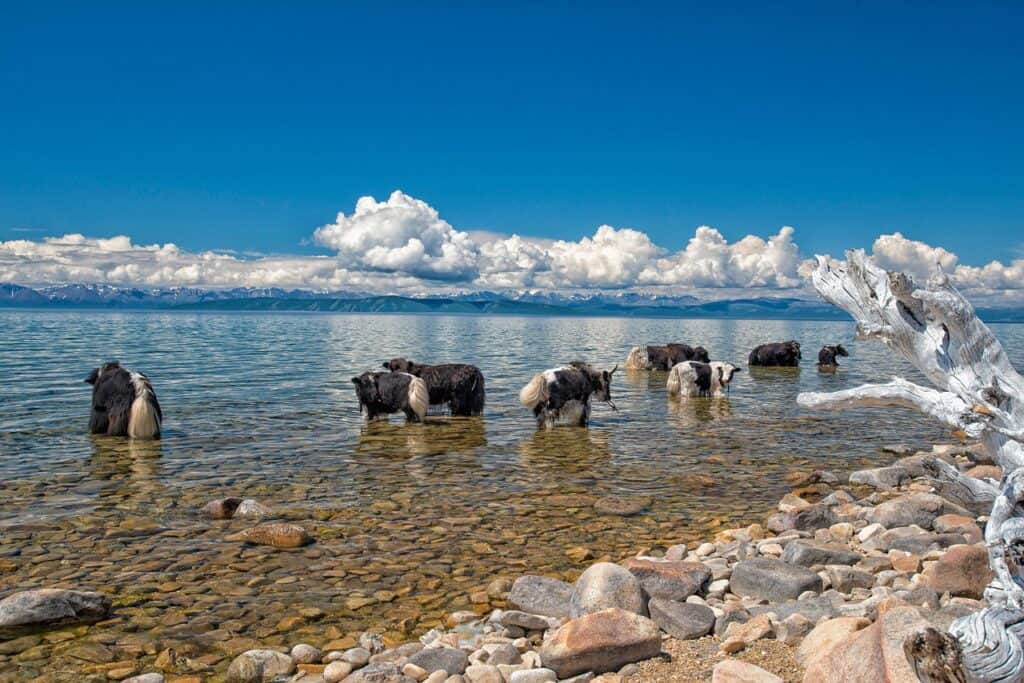
Unlike horse racing, yak racing is less about pure speed and more about raw stubbornness and stamina, and watching a herder wrestle a very unimpressed yak into a saddle is comedy gold. The day typically runs through a yak parade, a bucking contest, races, and yak polo, plus milking contests judged on speed, wool-quality judging, and a “best decorated yak” beauty pageant that is exactly as delightful as it sounds. There are also live demonstrations of traditional felt-making, spinning yak wool into thread by hand, the same way it’s been done for generations.
Since the festival sits right next to Orkhon Waterfall, Khuisiin Naiman Nuur (the eight lakes formed by ancient lava flows), and Erdene Zuu Monastery, it slots in perfectly with a central Mongolia route – our Kharakorum Quest tour runs straight through this part of the country.
4 – Deep in the taiga, where reindeer outnumber roads: The Tsaatan Reindeer Festival
Early July (plus a smaller winter edition) · Khuvsgul Province · Northern Mongolia
Now for something completely different. In the far north, along the shores of Lake Khuvsgul, the Dukha people – better known as the Tsaatan, or “reindeer people” – live a life almost nobody else on the planet still lives: herding domesticated reindeer through dense taiga forest near the Russian border. Every July, some of these families make the journey out of the deep forest to hold the Reindeer Festival, and it’s as close as you’ll get to time travel in Mongolia.
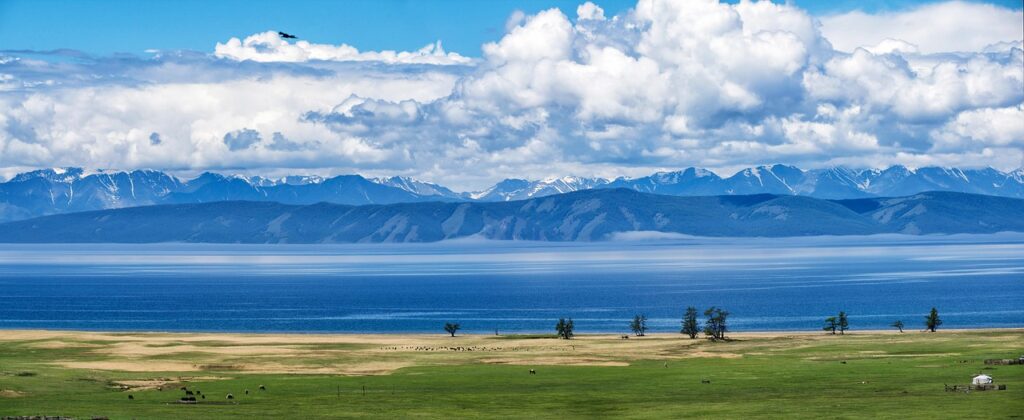
The festival exists to promote reindeer herding, protect the animals and the culture around them, and bring both domestic and international attention to a community that numbers only a few hundred families. Over two days you’ll see reindeer races, traditional Tsaatan and Mongolian concerts, and – best of all – the rare chance to actually meet the herders and their reindeer up close, something almost no other place on the planet still offers. There’s also a smaller winter edition, often paired with the Khuvsgul Ice Festival, for anyone brave enough to combine reindeer herders with a frozen lake crossing.
Getting here takes effort – it’s genuinely one of the most remote corners of the country – but that’s exactly the point. If Khuvsgul is on your radar, our Northern Mongolia Loop or Steppes Into Gobi routes both venture into the province, and we can help you time a self-drive trip around the festival dates.
Mongolia festivals worth building a trip around
Festivals for locals and visitors alike
What ties all of these together is what makes Mongolia festivals so different from festivals anywhere else: they’re not staged for tourists. They’re working celebrations, thrown by herding communities themselves, for the animals that quite literally keep them alive through some of the harshest terrain on the planet. Camels in a snow-dusted desert, thousands of horses on the open steppe, yaks refusing to cooperate with anyone, reindeer wandering out of the taiga – it’s a lineup no other country on Earth can put together.
The catch is logistics. These festivals happen in remote provinces, on dates that can shift slightly year to year, and getting there usually means driving hours of open steppe or desert track with zero phone signal. That’s exactly what a self-drive 4×4 is built for – full flexibility to chase the festival calendar and still have time to explore the singing dunes, frozen lakes, and volcanic craters in between.